The Engineering Challenge
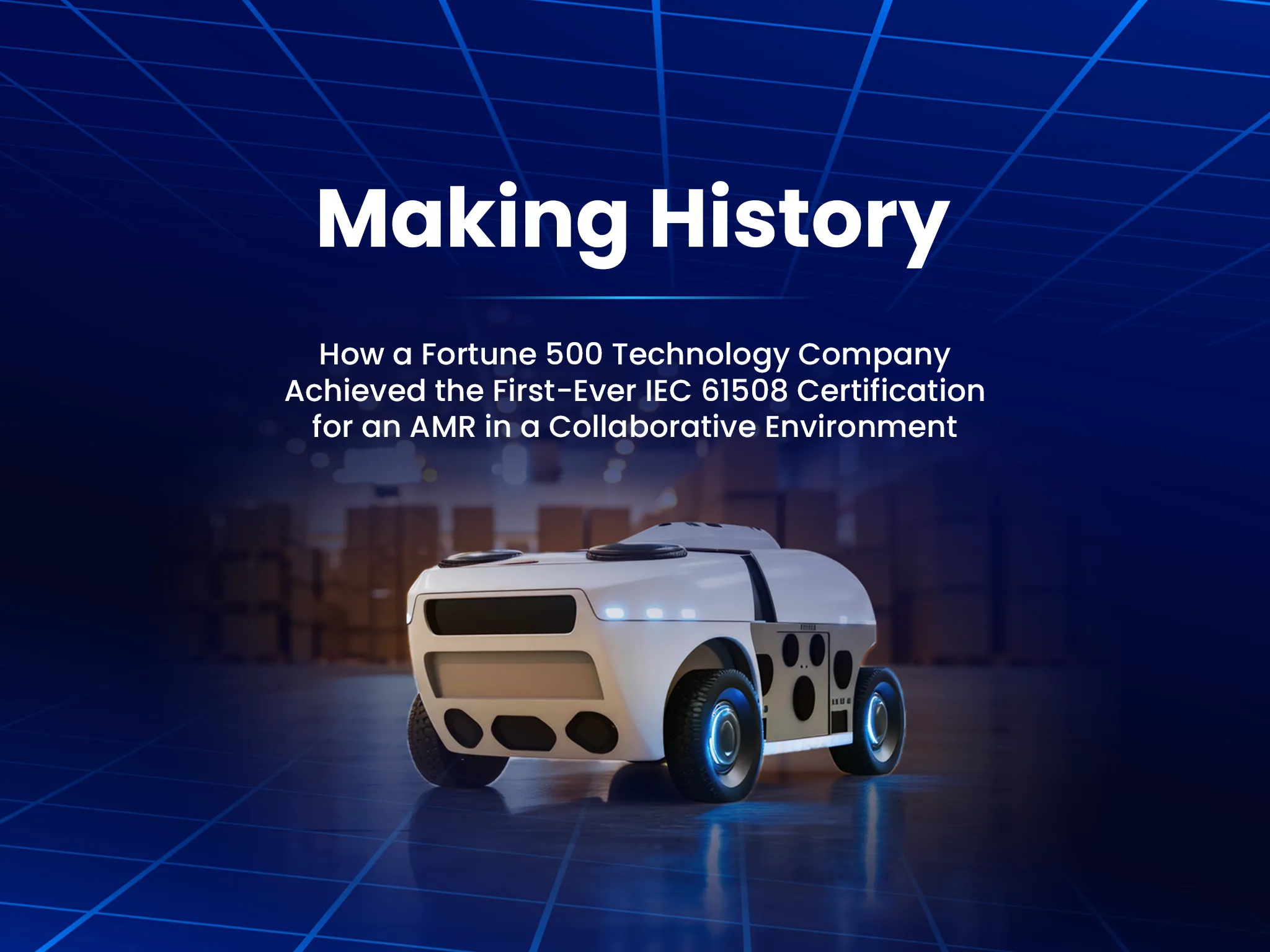
A Fortune 500 technology firm developing a first-in-class autonomous mobile robot (AMR) faced a critical commercial and technical roadblock. The vehicle was designed to operate within a collaborative workspace alongside human personnel, setting an exceptionally high bar for safety compliance and risk mitigation.
To bring the product to market, the manufacturer had to achieve formal certification under IEC 61508, the international standard for electrical, electronic, and programmable electronic (E/E/PE) safety-related systems.
However, the organization was constrained by major operational hurdles:
The internal functional safety team was severely understaffed and lacked the bandwidth to manage a full-scale certification program.
The hardware and software engineering teams were moving at an aggressive development velocity, utilizing rapid design iterations that outpaced traditional compliance processes.
There was an absolute absence of documented safety processes, compliance frameworks, or audit-ready engineering artifacts.
Deploying standard, rigid safety management methods would have introduced massive bottlenecks, stalling development sprints and forcing costly design rework. The client required senior, specialized engineering support capable of independent execution within an agile framework.
The Integrated Solution
Critical Systems Analysis (CSA) addressed this resource deficit by embedding principal functional safety engineers, each with over 15 years of industry experience directly into the client's active development team. Rather than acting as detached, external advisors who merely review documents, CSA safety engineers operated as hands-on team members leading the safety lifecycle execution.
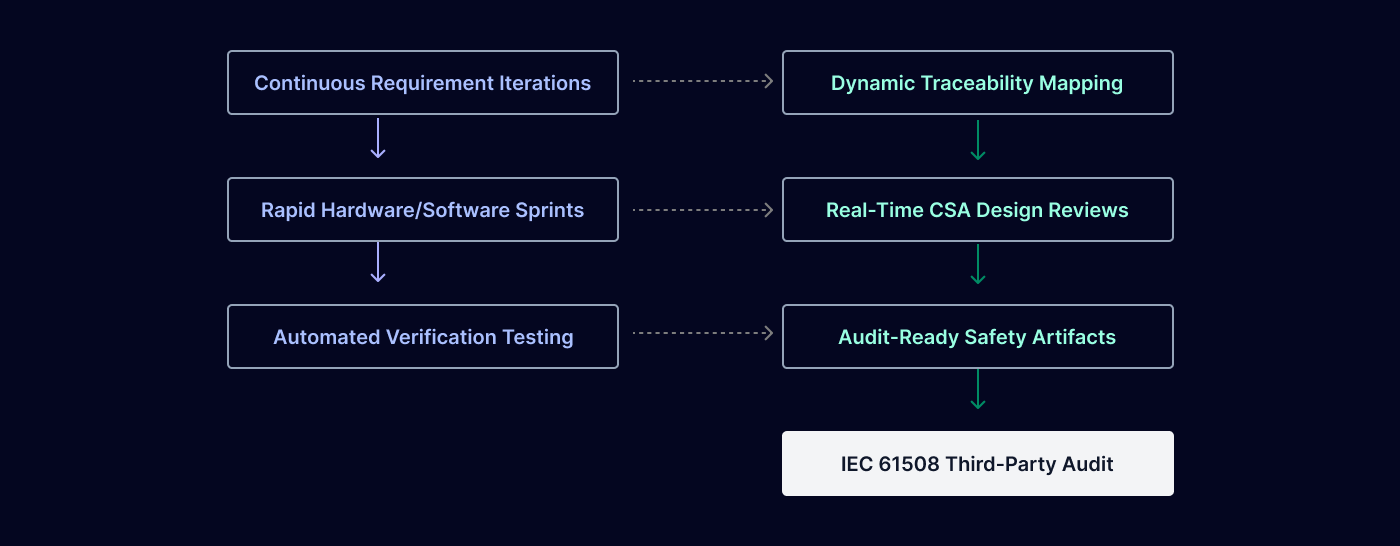
Recognizing that conventional compliance timelines would disrupt the engineering momentum, CSA constructed a dynamic safety management workflow tailored to the team's native operating structure:
Agile Change Management:
Safety engineers provided immediate, real-time evaluations of rapid design iterations and evolving architectural adjustments.
Dynamic Traceability Pipelines:
CSA managed continuous modifications to system requirements, ensuring that safety-critical requirements remained traceably linked to specific hardware components and software modules without slowing down developer velocity.
Frictionless Integration:
The safety program was mapped directly into the engineering team's existing development tools and sprints, avoiding the need to impose burdensome external compliance gatekeeping.
Concurrently, CSA designed and deployed a comprehensive safety infrastructure from the ground up. This involved building rigorous safety lifecycle processes, technical templates, and formal compliance frameworks capable of satisfying strict third-party auditors while remaining reusable for future product lines.
Verification and Operational Outcomes
The integrated engineering strategy allowed the platform to move through the compliance lifecycle without schedule slippage. The AMR successfully achieved formal third-party certification to IEC 61508, establishing a milestone as the first autonomous mobile robot certified for use in an unsegregated, collaborative human-robot workspace.
The engagement delivered substantial long-term benefits to the client's engineering organization:
Independent Ownership:
CSA’s principal engineers operated self-sufficiently, owning the compliance workload and alleviating the burden on the client's understaffed internal safety team without compromising technical depth.
Elimination of Schedule Bottlenecks:
By executing a phased lifecycle approach where verification and documentation occurred in parallel with design, the system achieved certification at the exact pace the project timeline demanded.
Sustainable Knowledge Transfer:
Through daily collaboration, the client’s core software and hardware teams built a functional understanding of safety-critical design principles, permanently embedding a rigorous safety culture into the company's engineering division.
Reusable Compliance Infrastructure:
The documented frameworks, processes, and safety lifecycle templates established by CSA remain with the client as a permanent asset, providing a standardized blueprint to accelerate future autonomous system certifications.